Bookstore - szablon szczegóły
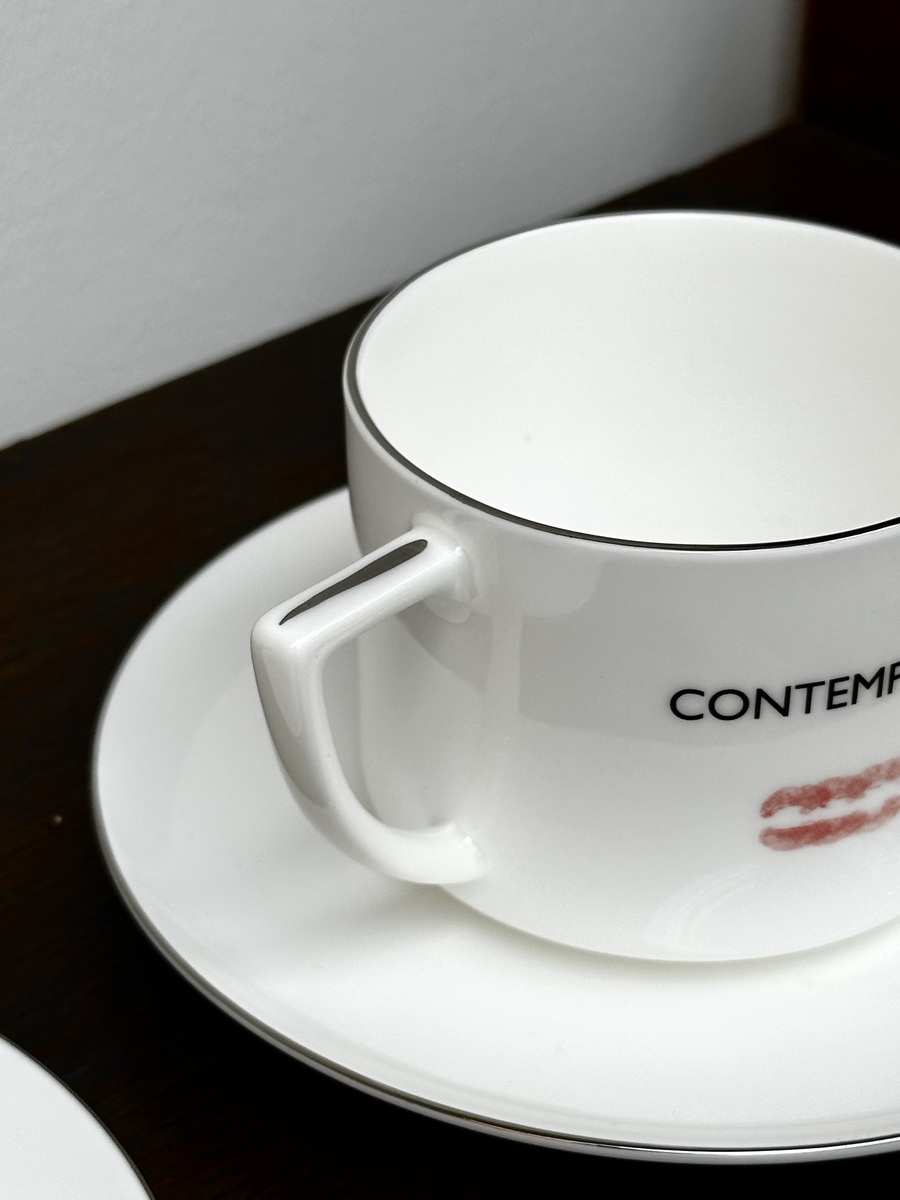
Ewa Partum. Contemplating Art / Contemplating Love
- Autor:
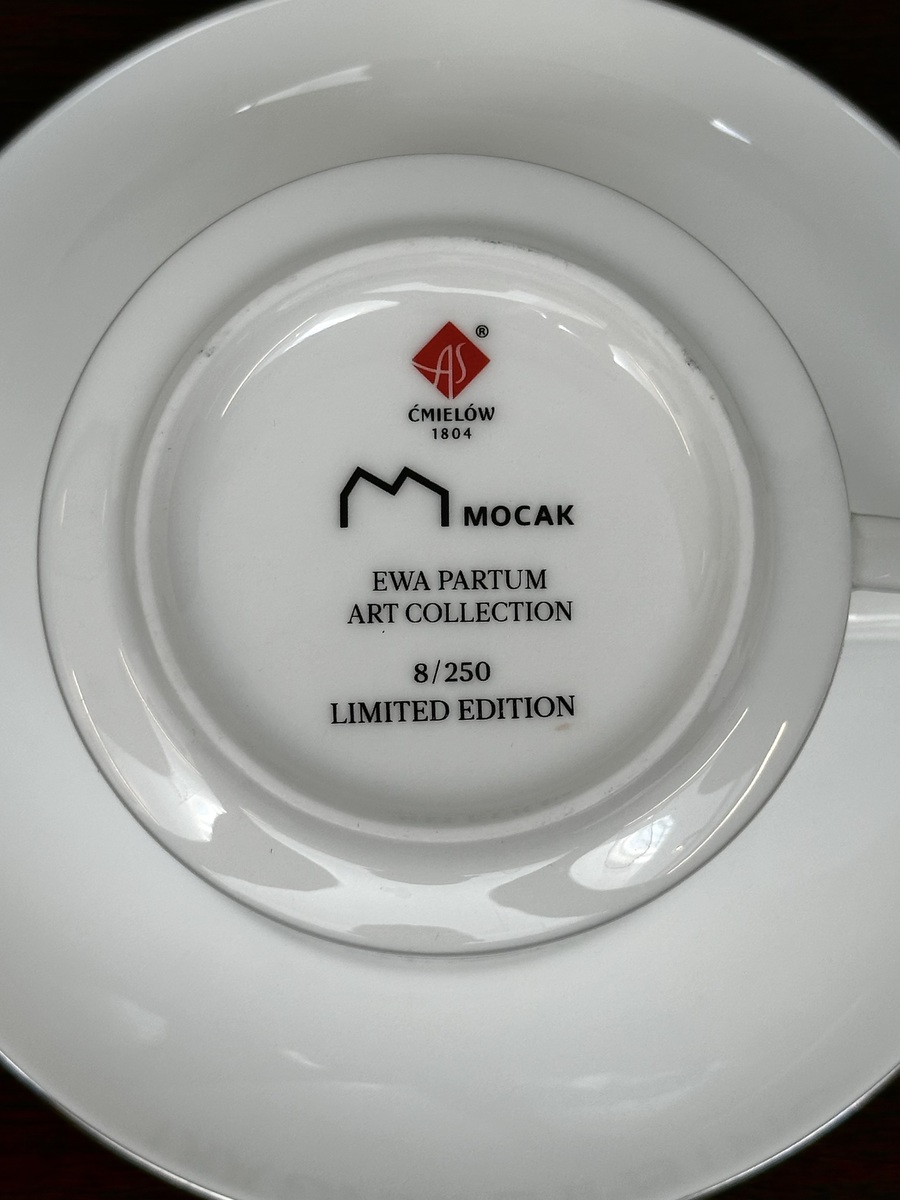
- AS Ćmielów 1804 × MOCAK
- Waga:
- 1 kg
- Wymiary:
- 250x320 mm
Ewa Partum
Contemplating Art / Contemplating Love
Seria filiżanek
AS Ćmielów 1804 × MOCAK Edycja limitowana
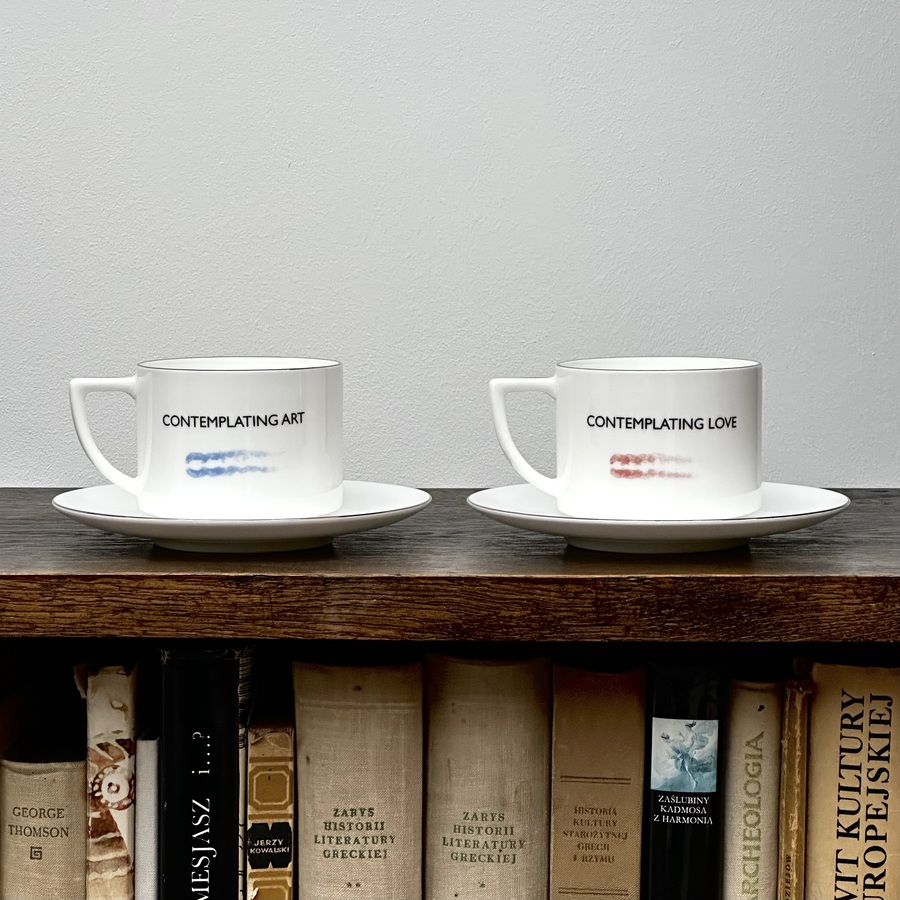
Contemplating Art oraz Contemplating Love rozwijają jeden z najbardziej konsekwentnych i rozpoznawalnych wątków twórczości Ewy Partum: słowo jako działanie. Artystka od końca lat 60. traktuje język nie jako instrument opisu rzeczywistości, lecz jako narzędzie sprawcze, które konstytuuje relacje społeczne, normy kulturowe i mecha-nizmy władzy. W tym sensie filiżanka – przedmiot codziennego użytku – staje się nośnikiem znaczenia porównywalnym z performansem czy interwencją w przestrzeni publicznej.
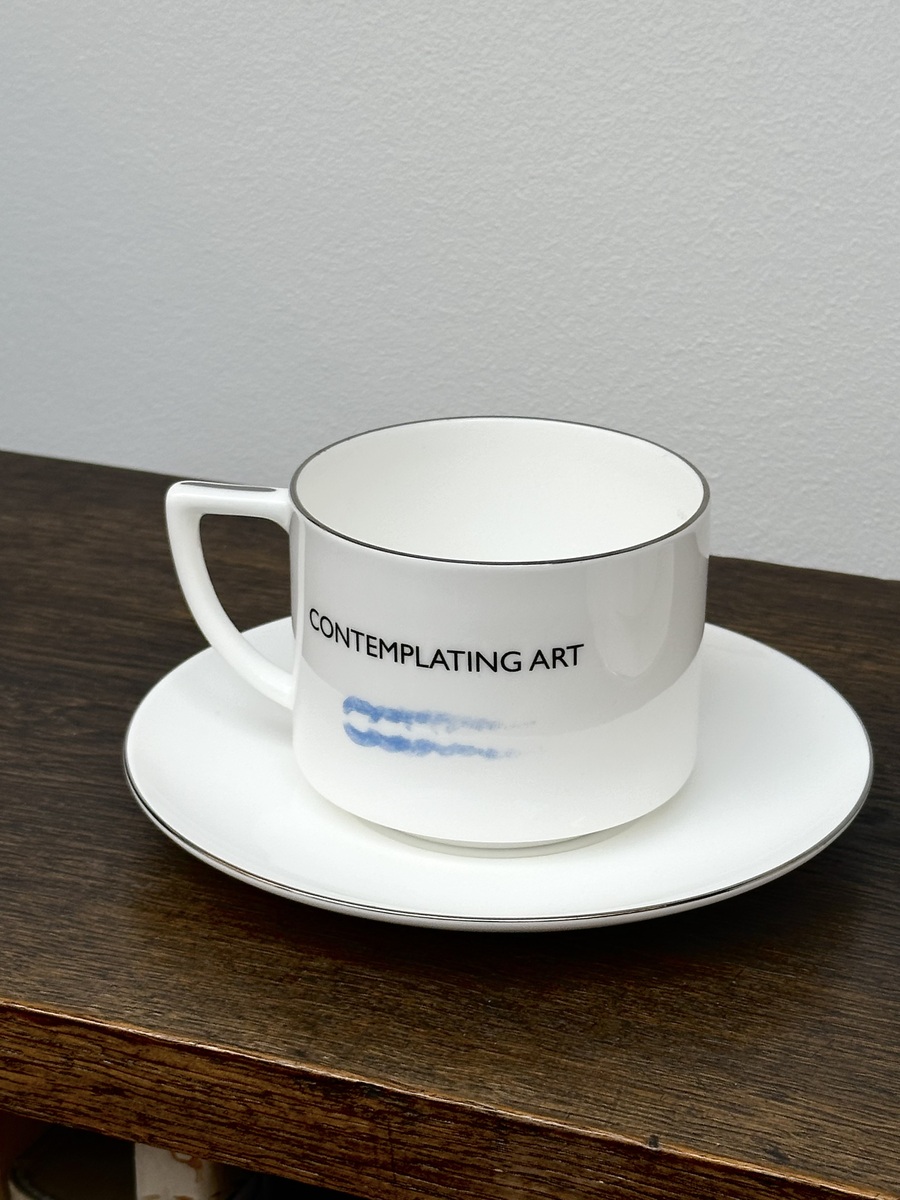
Napisy „contemplating art” oraz „contemplating love” funkcjonują tu jak instrukcja mentalna. Nie informują, lecz inicjują proces: zapraszają do zatrzymania, refleksji i wspólnego doświad-czenia. Wprowadzenie tekstu w rytuał picia kawy lub herbaty przenosi akt kontemplacji z pola instytucji sztuki do sfery intymnej i relacyjnej. To charakterystyczna dla Partum strategia de-mokratyzacji sztuki – przesunięcia jej z przestrzeni galerii w obszar życia codziennego, bez utraty krytycznego potencjału.
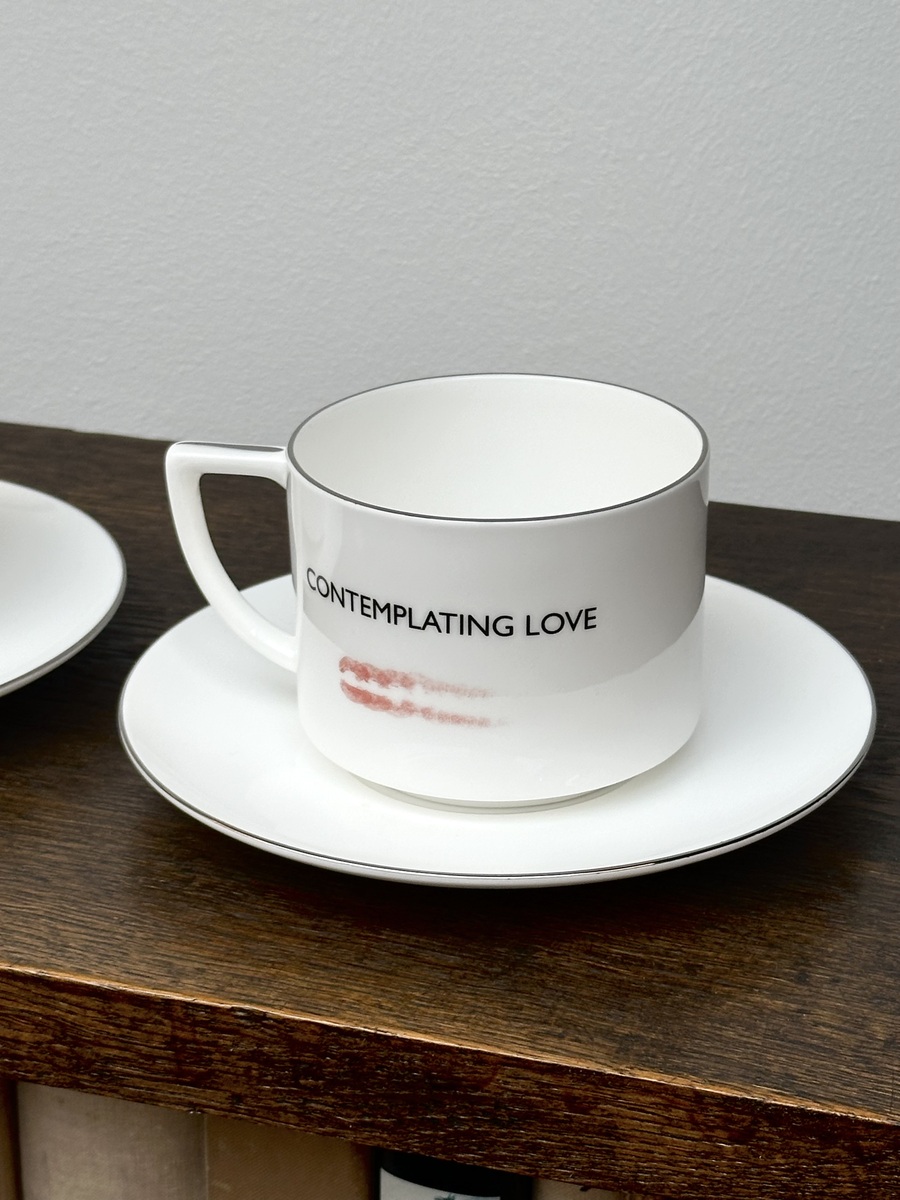
W Contemplating Love szczególnego znaczenia nabiera relacyjny wymiar obiektu. Filiżanki projektowane są jako para – nie tylko jako zestaw użytkowy, lecz jako model sytuacji społecznej. „Miłość” nie zostaje tu zdefiniowana ani zilustrowana; istnieje wyłącznie jako sło-wo uruchamiające myślenie, rozmowę, negocjację sensów pomiędzy dwiema osobami. To po-dejście pozostaje spójne z feministycznym wymiarem praktyki Partum. Język tej sztuki ujaw-nia ukryte hierarchie, ale może też stać się narzędziem ich przekształcania.
Istotna jest również materialna powściągliwość obiektów. Prosta forma, neutralność bieli i oszczędność środków formalnych kierują uwagę wyłącznie na tekst i akt jego internalizacji. W ten sposób filiżanki wpisują się w tradycję sztuki konceptualnej, gdzie idea ma pierwszeń-stwo przed estetyzacją, a dzieło istnieje pełniej w świadomości odbiorcy niż jako autonomicz-ny przedmiot.
- - -
Ewa Partum
Contemplating Art / Contemplating Love
Teacup series
AS Ćmielów 1804 × MOCAK Limited edition
Contemplating Art and Contemplating Love develop one of the most consistent and recognisable themes in Ewa Partum’s work: the word as action. Since the late 1960s, the artist has treated language not as a tool for describing reality, but as one with the power to affect social relations, cultural norms and mechanisms of power. In this sense, a teacup – an everyday object par excellence – becomes a carrier of meaning comparable to a performance or an intervention in public space.
The inscriptions ‘contemplating art’ and ‘contemplating love’ function here as intellectual instructions. Rather than provide information, they initiate a process: inviting us to pause, reflect, and share an experience. The introduction of text into the ritual of drinking coffee or tea transfers the act of contemplation from the field of the art institution to the intimate relational sphere of personal relationships. This is Partum’s characteristic strategy of democratising art – shifting it from the gallery space to the realm of everyday life, without losing its critical potential.
In Contemplating Love the relational dimension of the object takes on particular significance. The cups are designed as a pair – not only as a functional set, but as a model of a social situation. ‘Love’ is neither defined nor illustrated here; it exists solely as a word that triggers thinking, conversation, and negotiation of meanings between two people. This approach remains consistent with the feminist dimension of Partum’s practice. The language of this art reveals – but can also become a tool for transforming – hidden hierarchies.
The material restraint of the objects is just as significant. The simple form, the neutrality of white, and the economy of formal means direct attention solely to the text and the act of its internalisation. In this way, the teacups fit into the tradition of conceptual art, where the idea takes precedence over aestheticisation, and the work exists more fully in the viewer’s consciousness than as an autonomous object.